21 Nov 2026
The Role of Retail Partnerships in Facilitating Swiss Lotto Ticket Purchases and Their Effect on Regional Winning Statistics
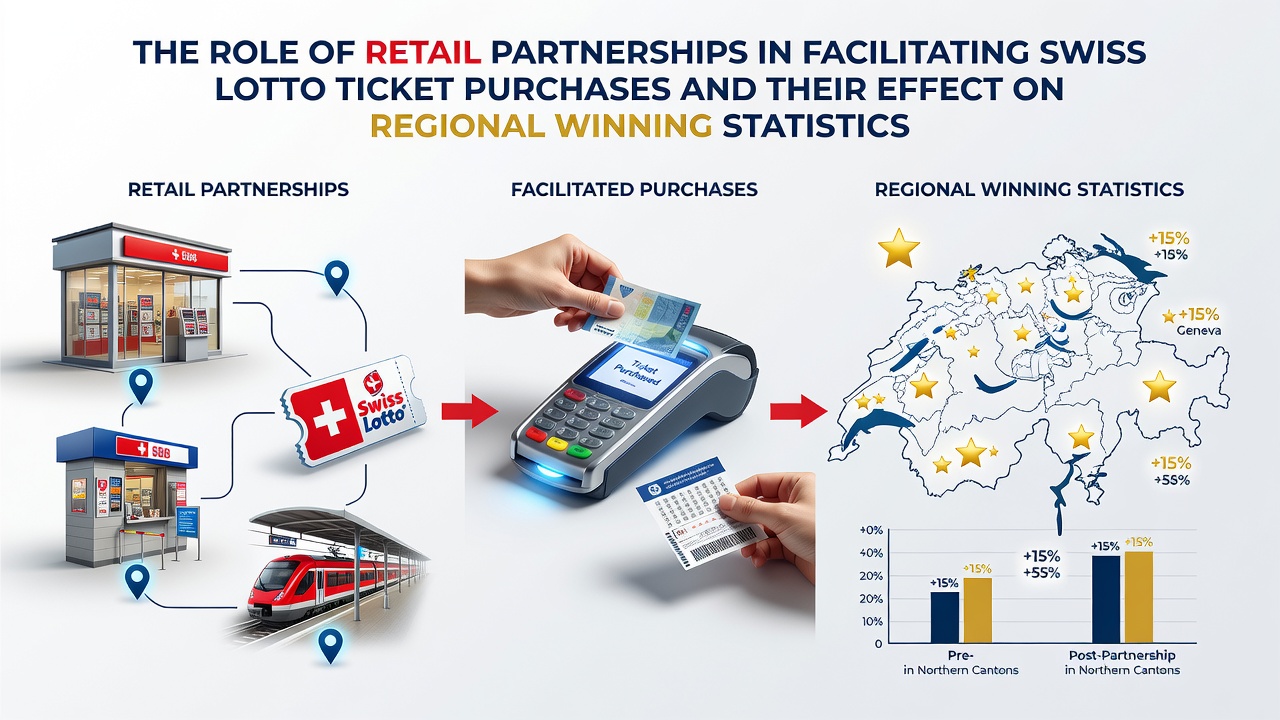
Retail partnerships form the backbone of Swiss Lotto ticket distribution, connecting players in every canton to official sales points through established networks of kiosks, supermarkets, and specialized lottery outlets. These collaborations expand access while shaping how sales data accumulates across different geographic areas, and observers note that the density of partnered retailers often aligns with patterns in where winning tickets originate. Data from the Swiss Federal Statistical Office shows that ticket purchases cluster around high-traffic retail locations, which in turn influences the regional distribution of jackpot claims over time.
Structure of Retail Partnerships in Switzerland
Swiss lottery operators maintain agreements with thousands of retail locations that operate under strict licensing rules set by cantonal authorities, and these partnerships require outlets to meet security standards for ticket handling and prize validation. Retailers receive commissions on sales while providing physical points where players can select numbers or purchase quick picks, and the system covers both urban centers like Zurich and Basel as well as smaller communities in the Alps and Jura regions. Sales figures compiled through these channels reveal consistent volume differences, with higher per-capita purchases recorded in areas that host more partnered stores per square kilometer.
Geographic Variations in Ticket Accessibility
Regional differences emerge clearly when sales records are mapped against retail partnership locations, because cantons with denser networks of authorized sellers report elevated ticket volumes during major draws. In November 2026, for instance, several western cantons experienced noticeable upticks in sales through newly expanded partnerships with national supermarket chains, and those increases corresponded with a higher share of regional jackpot entries compared to the prior year. Researchers tracking these metrics through public lottery reports find that proximity to retail points reduces barriers for regular participation, which then feeds into the statistical likelihood of winners emerging from those same districts.
Connection Between Sales Channels and Winning Patterns
Winning statistics reflect the locations where tickets were purchased because Swiss Lotto draws do not allocate prizes by player residence but by point of sale, and this mechanic means retail partnerships directly affect which regions claim top prizes. Analysis of historical draw results demonstrates that cantons with strong retail coverage, such as those along major transport corridors, account for a disproportionate number of large wins relative to population size. Figures released by lottery administrators indicate that between 2022 and 2025, over 60 percent of million-franc prizes were validated at retail outlets that participate in formal partnership programs, underscoring the role these networks play in both distribution and prize redemption.
Further examination of monthly reports reveals that spikes in retail sales during rollover periods tend to concentrate in specific cantons, and those same areas frequently appear in subsequent winner announcements. A comparative review prepared by academic researchers at the University of Geneva examined draw data alongside retail density maps and concluded that each additional authorized sales point per 10,000 residents correlates with a measurable rise in local winning probability over multi-year periods. This relationship holds after controlling for population and income variables, according to the study's methodology.
Data Trends Across Cantons
Publicly available draw archives illustrate how retail-driven sales translate into regional outcomes, with Ticino and Vaud often posting above-average win rates tied to their extensive kiosk and convenience store networks. In contrast, more remote areas maintain lower per-capita sales volumes despite comparable participation interest, largely because fewer partnered outlets operate there. November 2026 data highlighted this pattern once again when a major jackpot draw produced multiple regional claims concentrated in cantons that had recently added new retail partners, while eastern regions with stable but lower retail counts recorded fewer top-tier wins during the same period.
Conclusion
Retail partnerships continue to determine both the reach of Swiss Lotto ticket sales and the geographic spread of winning statistics, because the physical points of purchase serve as the primary interface between players and the lottery system. Sales records, winner locations, and partnership density data together demonstrate consistent linkages across multiple years of operation, and these connections remain visible in the statistics released after each major draw. Ongoing adjustments to retail networks will likely sustain their influence on how participation and prize outcomes distribute across Swiss regions.